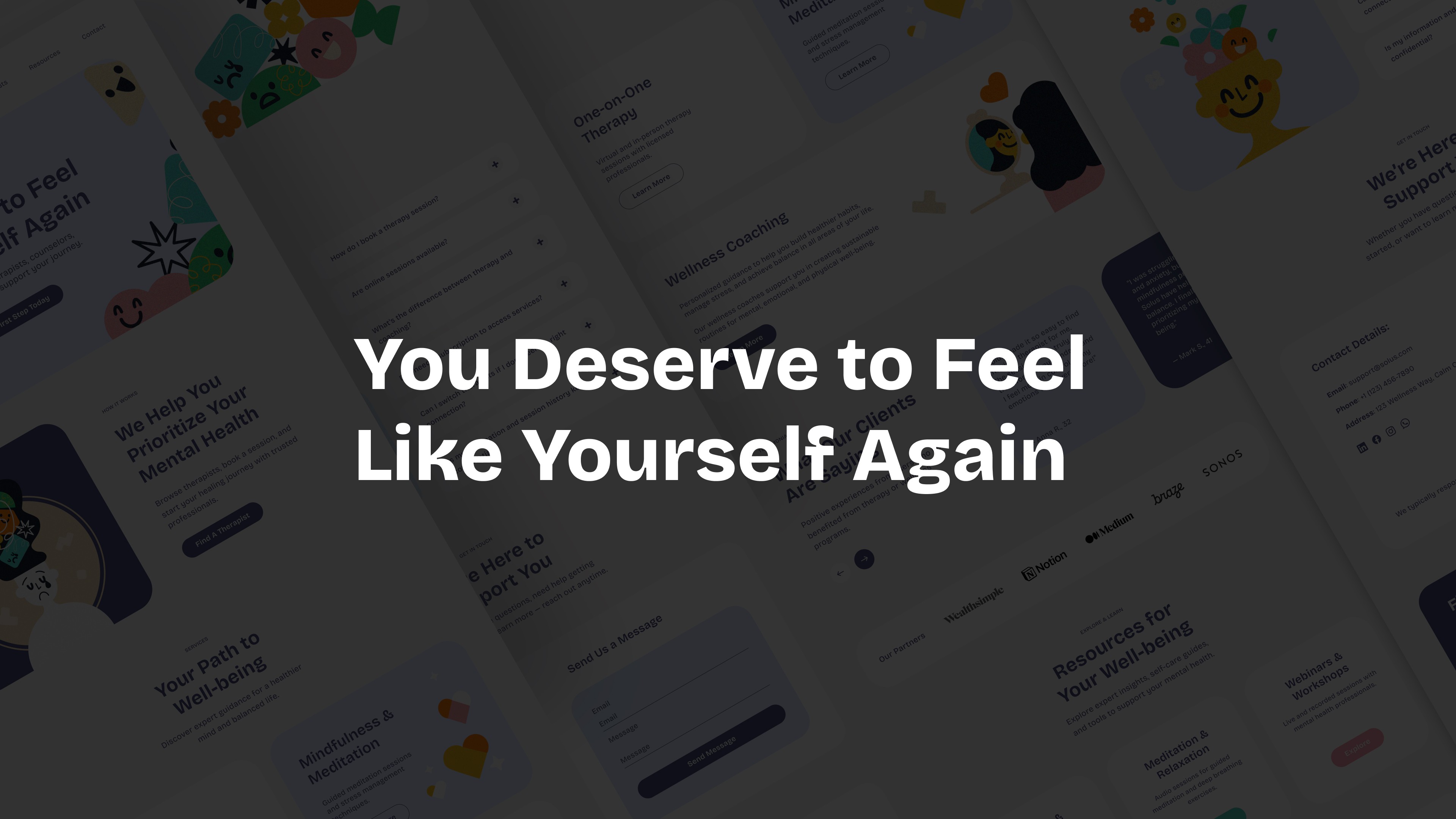
Design isn’t just about usability, it’s about emotional safety. This project was built on empathy, not aesthetics, aiming to make the first step toward mental health support feel human, hopeful, and free of fear.
By combining human psychology with structured design strategy, I built an experience that guides users from hesitation to trust. Every word, color, and interaction was shaped to calm uncertainty, create clarity, and turn emotional readiness into confident action.
UX Challenge
People seeking mental health support face a dual burden: they're already vulnerable, and most therapy platforms overwhelm them with complex pricing, unclear service differentiation, or clinical coldness that reinforces stigma. The core challenge was eliminating decision paralysis while making users feel seen, validated, and safe enough to take action.
UX Process
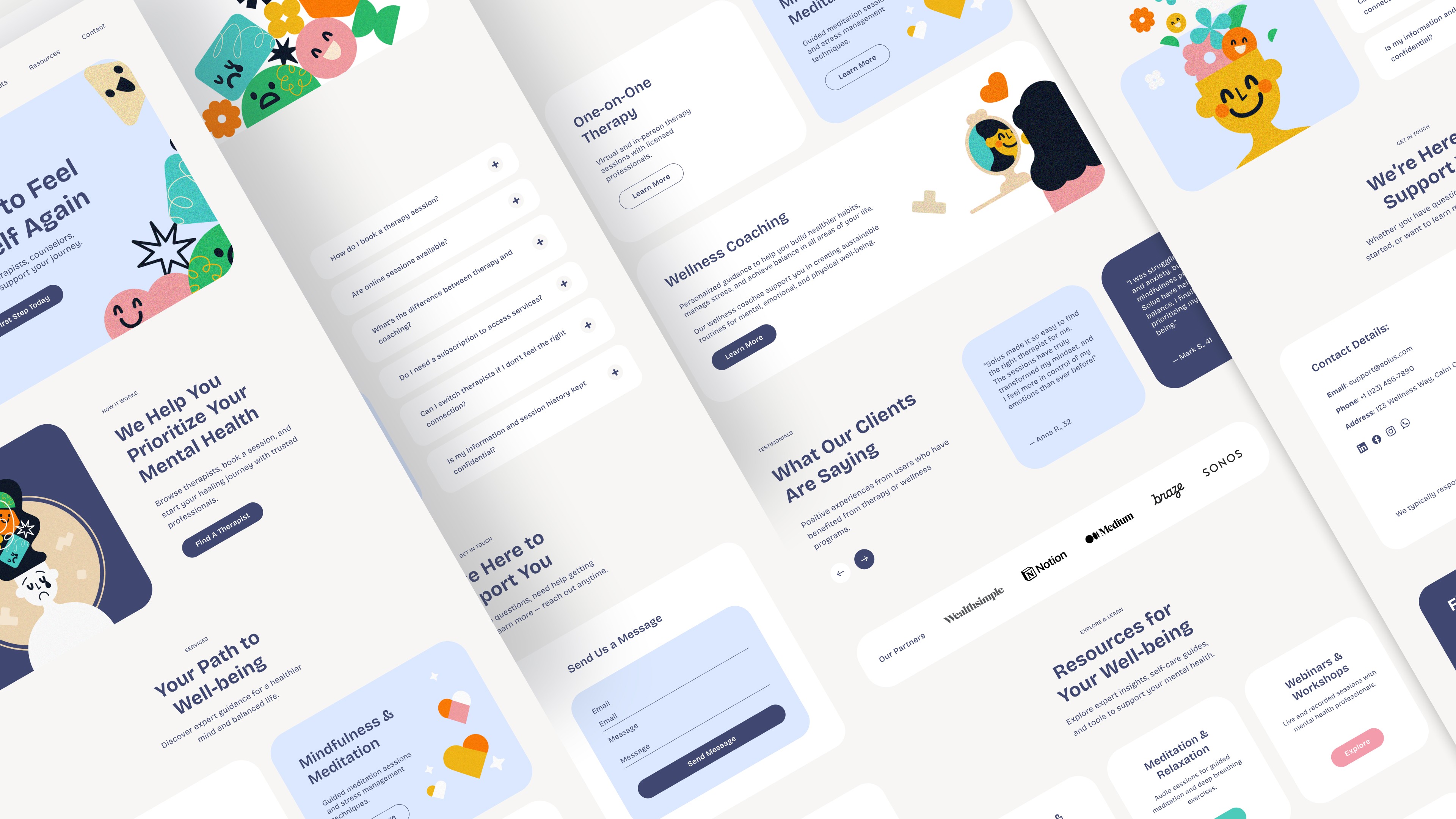
I started by mapping the emotional journey of someone in crisis or contemplation, they need validation before information, and clarity before commitment. I prioritized progressive disclosure, introducing services through benefit-focused language rather than clinical categories. The information architecture moves from emotional reassurance (hero) to service clarity (offerings) to social proof (testimonials) to action (contact), mirroring the trust-building sequence users need. Every section was designed to answer the next logical question in their internal dialogue.
Design Solution
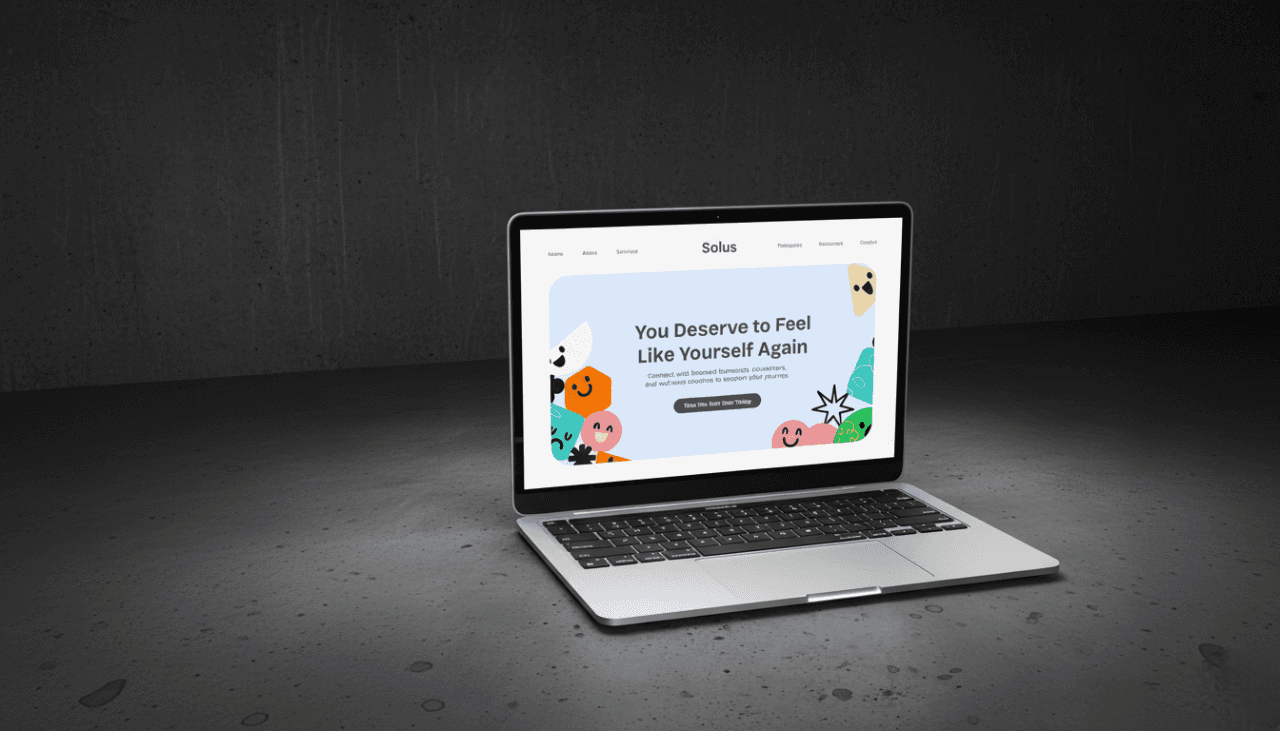
Emotional-first hero section: The headline "You Deserve to Feel Like Yourself Again" leads with validation, not services, addressing the user's emotional state before asking for anything.
Playful, humanizing illustrations: Friendly characters reduce the clinical intimidation factor and signal psychological safety, making mental health feel approachable rather than sterile.
Benefit-driven service cards: Each offering (One-on-One Therapy, Mindfulness & Meditation, Wellness Coaching) emphasizes user outcomes over process, with minimal cognitive load per card and clear CTAs.
Social proof positioned mid-journey: Client testimonials appear after service introduction but before the action request, reinforcing credibility at the moment of maximum consideration.
Resource cards with distinct visual separation: Color-coded resources (yellow/teal/pink) create scannable variety while maintaining hierarchy, users can self-select their entry point without feeling forced.
Low-commitment contact flow: The final CTA offers both immediate contact options and a simple message form, respecting user readiness levels and reducing abandonment.
Result / Impact
The design creates a psychologically safe conversion path that meets users at their emotional starting point, builds trust through clarity and warmth, and removes friction from the decision to reach out, transforming hesitation into hope-driven action